Posts mit dem Label Perspektiven werden angezeigt. Alle Posts anzeigen

Samstag, 9. April 2022

Going Home

What are you doing for Easter?’ asked a friend today.

‘Going home,’ I said.

But what does ‘going home’ mean? It seems a phrase full of  possible meanings.

‘We’re going home’, was what the hero would declare at the end of films in boyhood days, before the credits began to roll on the black and white television screen.

There would be a shot of weary but victorious men heading back to wives and families.

‘You’re going home’, is a word of reassurance, a statement that all will be well, that there is no need to worry, that others will now deal with whatever must be done.

The thought of going home brings thoughts of security, of rest, of problems resolved, of petty annoyances being set aside. Going home is a thought to bring a moment of peace.

But where is home? Is it perhaps the place in which we spent our childhood years? But what if everyone we knew has long since gone? Is it the place where we have lived for most of our life?

What if we have moved house frequently, with long distances between each place? Is it the place where we find our family?

What if our loved ones are scattered across various locations, perhaps even in different countries?

‘Home is where the heart is’ was often heard growing up in Finglas. What did it mean? Your heart might be in many places, or in no place at all, did that mean you had many homes, or no home at all? It did not really make sense, even in those times. 

Short of making the final journey, what does ‘going home’ mean when there is no place we might call home? 

Is ‘home’ an aspiration? Is it hoping for the sort of place where people might gather in Christmas movies?

Is it a collection of images that includes barbecues on summer evenings, and well- kept gardens, and kindly neighbours, and close knit communities, and family members coming back on surprise visits? One can hardly conjure such a home from nothing.

Perhaps, for those of us who have lived far away fron their first home, ‘home’ is like retirement, something that will only be recognized when we arrive there.

Donnerstag, 21. Oktober 2021

All that you can't leave behind..

Twenty years from now, you will have new skills. New customers. A new title and a new kind of leverage. All of this forward motion requires a less celebrated element–all the things you’re not doing any longer.

To get a new job, you’ll need to leave the old job behind.

When you have a child, you’ve started a process that leads to an adult…

Often, we try to pretend that growth comes with no goodbyes, but it does.

Perhaps we can go in with our eyes open, understanding that what we begin will someday be left behind.


Freitag, 12. Juni 2020

Remote Work

"Eines der größten Dinge, die bei der Fernarbeit verloren gehen, sind zufällige Besprechungen. Diese sind sehr wichtig, aber schwer zu quantifizieren. Wenn Sie die Produktivität einzelner Projekte messen, scheint alles in Ordnung zu sein. Wenn Sie jedoch Geschichten darüber lesen, wie innovative Dinge zu Stande kommen, waren zufällige Treffen oft entscheidend."


"Chance meetings are especially important in causing new things to happen. But what organization measures that? No one measures progress till there is a project to measure the progress of."


Freitag, 22. Mai 2020

Rembering better days and Jim Fixx

Ran a slow 10K (58 Minutes) early yesterday and passed the time thinking back on better days (38 Minutes). Jim Fixx came to mind, in 1977 he wrote the bestseller "The Complete Book of Running" and in 1978 I took up jogging. Unfortunately and surprisingly he died of a heart attack in 1984, the year of my first marathon in the Black Forest. 

To read his book now is to see how much he foresaw. Some parts are dated. But much of it reads as visionary. Cut out white flour and sugar? Practice self-care? Find a flow state? Exercise regularly, even for short amounts of time, to live better and longer? It’s like reading 20 years of modern studies 40 years before the fact.
Fixx wrote about the barefoot-running Tarahumara decades before Born to Run.

His homemade mileage counter was basically an early Fitbit. He was right on the big points too. A Stanford study later found jogging is effective in increasing lifespan and mitigating the effects of aging. Running can help ward off all manner of diseases—including lowering the risk of lung, prostate and colon cancer. 

And, in a study the printed this year, “among a generally healthy but sedentary group of adults in their 20s, 30s and 40s, working out lowers levels of depression, hostility and other negative feelings.”


Dienstag, 7. April 2020

Angelo on Corona

Zitat Angelo von heute:
„Auch wir als Familie versuchen, in diesen beunruhigenden Zeiten stark zu bleiben. Kira hat dieses wundervolle Lied geschrieben, das eine Art Gebet darstellt. Wir merken deutlich, wieviel Kraft es uns gibt, gemeinsam als Familie zu beten und zu singen. Und wir hoffen, dass unser Song viele Menschen berühren und ihnen Hoffnung schenken wird.“

„Stay With Me“, die erste Single aus ihrem am 22. Mai folgenden Album „Coming Home“.

Für mich das schönste Corona Lied bis jetzt.


(Und echt tolle Aufnahmen von der irischen Landschaft!)


Dienstag, 24. März 2020

Social distancing

“Social distancing,” yes indeed. It’s basically what June and I consider ordinary life. We’re retired, we’re home a lot, and don’t have the energy to cope with huge events like concerts, parades, sport events and so on. We don’t go to pubs. 

So we’re doing our part by basically keeping on keeping on. I’m working on techniques to avoid using my hands as much in public places. If I’m going through a door that simply pushes open, I push with my shoulder.  After I wash my hands in the gents, I dry them on a paper towel and then grip the door handle through the towel. I’m all for flattening the pandemic curve. What I don’t think is a good idea is flattening the economy. More here about this from David McWilliams.

So we’re wandering around the living room or the garden, reading, writing, working in the garden, pulling weeds, and so on. Life continues.


Montag, 3. Februar 2020

Rugby, Six Nations

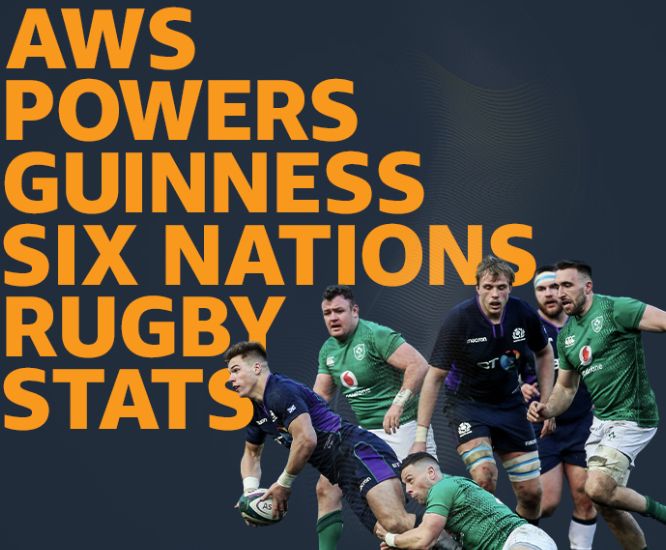
2020 - 1st February in Dublin: Ireland 19 Scotland 12, off to a good start this season.

And for the first time the Six Nations is powered by AWS.


First played in 1883 as the Home Nations Championship among England, Ireland, Scotland, and Wales, with the inclusion of France in 1910 and Italy in 2000, the Six Nations Championship is among the oldest surviving rugby traditions and is one of the best attended sporting events in the world. Working with AWS and its partner Stats Perform, Six Nations is adopting new technologies that will help fans better understand the complexities and nuances of decisions made on and off the pitch.

Oh, and Stuart Hogg dropped the ball!!!


Montag, 9. Dezember 2019

Go Outside

Before you make a big decision, go for a walk around the block.


  • If it’s raining out, take the dog for a run.
  • End the meeting a few minutes early and go for a stroll with the team.
  • Instead of an afternoon snack, consider some sunshine.
The less convenient, the more it pays. A hard habit to create, but definitely worth it. When in doubt, go outside. Especially when it’s inconvenient.


Dienstag, 3. Dezember 2019

Gall's Law

Reflections on perbit Insight before 2020.

"A complex system that works is invariably found to have evolved from a simple system that worked. A complex system designed from scratch never works and cannot be patched up to make it work. You have to start over with a working simple system."

However he did add a qualifier "A simple system may or may not work."

See also Systemantics.

Montag, 28. Oktober 2019

MONEY, COMMUNITY and PROPERTY

Willi Haller aus vergangenen Tagen, zum Nachdenken (long read):

Without a doubt, money is one of man's greatest inventions. Without money as a means of exchange, a society based on division of labor, as it is today, spread all over the world, would be inconceivable. However, with its role as medium of exchange, its purpose cannot be adequately described.

The second, basically equally great function of money is that it can be easily saved and that it can be capitalised as financial assets. This saving and the consequent relinquishment of consumption may be problematic for some representatives of unlimited growth. However, it is indispensable because there are many projects which can not be financed from current income and often require the cooperation of many to finance them.

The absolutely necessary criticism of our financial behaviour is therefore not directed against money par excellence, but against the way in which we deal with accrued capital, to whom we make it available and under what terms this is conducted. 

The pure doctrine proclaims that money is not a commodity but based on trust and obligations and is therefore without obligation to claim an accrual, that is, interest. This is quite true, especially since most cash currencies have no gold security and their value is ensured almost entirely by trust.

There is a problem with interest, both in principle and in the way the interest rate is set. A fundamentalist criticism would flatly reject the application of interest. It relies on the Bible (which rejects interest rates among its peers) and the Koran (which represents the same line as the Bible). As is well known, Jesus goes even further than the so-called Old Testament. He simply says: lend without expecting anything in return. The pros and cons of interest could be arguably disputed. The fact is that it has a downright murderous offspring called compound interest. It ensures that there is exponential growth in the absence of debt service or lack of continued consumption, leading to an explosive increase in money. If, for example, a gift of ten thousand dollars in the form of a government bond was given to a baby a few years ago, its value accumulates to around one million dollars if the person does not consume the credit and its increment until retirement age. The big debt crisis of the so-called Third World has its roots here.

Out of this emergency, especially with reference to Silvio Gesell, the Nestor of interest-free or negative interest rates in recent times, to demand a complete renunciation of interest, goes past the realities. Not only are billions of dollars being raised daily by all sorts of banks and private individuals but this is specifically linked to the conditions for paying interest. In addition, almost everyone claims an annual growth for their monetary assets which goes beyond inflation compensation.Our consciousness demands this, and the zeitgeist seems to be in agreement.

Regrettably, it is usually overlooked that our interest-rate attitude is related to both a demand for and promotion of separateness by us all, an individualization that strives for every attainable financial security, above all for old age. A renouncement of this protection presupposes a solidarity community which really deserves to be called such. Unfortunately, it is virtually non-existent these days.

Much more problematic is the form of fixing interest rates practiced almost everywhere today. It is based on the so-called “credit rating” and ranges from AAA 1 for the best, most creditworthy addresses down to the loan seekers who are not creditworthy at all and therefore are not granted loans. The interest rate to be set depends on the creditworthiness, ie the credit rating. It is the lowest among the AAA 1 addresses and grows on the way down so that actually, in the end, those who pay the highest interest are the ones who need money most and vice versa. The old adage is thus confirmed: Those who do not need money can borrow as much as they like for the lowest rate of interest and those who need it most urgently don’t get a penny.

There is one last point to mention about money. We have a downright sacred awe for everything related to money. It’s not just that we do not or rarely talk about it but it is also virtually exempt from tax. Apart from an insurance tax [in Germany], the entire financial system is tax-exempt, while all sales of goods or other services are subject to value added or sales tax. It is a matter of urgent necessity to apply a value added tax of at least 0.1% on all stock exchange transactions and all bank transactions. This would not only open up a huge source of revenue for the states, but would also reduce the risk of speculative transactions everywhere.

It is usually overlooked during the whole discussion about money and capital, that the capital employed per job has grown tremendously over the past decades. According to figures from the German Federal Statistical Office in Wiesbaden, today we need an average of around a quarter of a million marks (or roughly half in euros) to finance a job with all the trimmings. As a rule, employees do not have enough financial assets (or credit) to do so. Outside investors are therefore indispensable. So how are they going to be paid or compensated?

Let’s move on to the question of property. Again, there are no simple black and white answers. Property, as we know it today, was probably created in the first half of the last millennium BC. Before that, everything belonged to everyone, so it was common property and private property was largely unknown.

This changed with the tremendous upheavals of the time, which were mainly due to climatic conditions and which lead to the private ownership of land. For example, private ownership of land was largely unknown among the ancient Teutons. There was the commons, the parish common and the fief. That seemed to be essentially enough. Today it has become an almost sacred cow for Westerners and one which has to be defended under all circumstances. It seems that there is the need for a differentiated approach.

Nobody seems to seriously question private property for the objects of everyday use. In home ownership, however, this is different and even more so with land ownership. For Westerners, owning a home seems to take on the role of a second skin. Private property with home ownership is therefore probably morally harmless, even though ownership, for example, through a foundation and the lifelong right to reside might seem more appropriate. It becomes problematic only when home ownership exceeds its own needs for the purpose of serving investment (and tax savings). The same applies to ownership of land.

Nobody will seriously question the ownership of resources for the founder and original entrepreneur. Again, as with many property issues, it will only be problematic for the first or second consecutive generation because they have contributed little or nothing to the emergence and preservation of wealth. The most problematic is undoubtedly ownership of more or less large amounts of money that are not used to cover one’s personal cost of living. It then only serves to increase and exercise power, for which, as a rule, it is poorly qualified and does little good for the debtor and the general public, often even harming it. The ideal here would undoubtedly be to place the sums which exceed one’s own financial needs into a foundation in order to use them to to meet part of the capital requirements of the economy and the rest of society. The keyword for this is called “neutralisation of capital”.

W. Haller (2002)

Mittwoch, 23. Oktober 2019

10 Jahre BST Gesundheitszentrum

Aus zwei Mitarbeitern wurden nunmehr 30, unter ihnen Diplom-Sportwissenschaftler, Physiotherapeuten und Fitnessökonomen.

Die Anzahl der Behandlungskabinen ist von fünf auf vierzehn gestiegen. 

Des Weiteren wurden Duschen gebaut, eine Halle für unsere Reha-Kurse etabliert und schließlich der Speedcourt fertig gestellt. Dank neuer Aufzüge wurde das BST Gesundheitszentrum zudem barrierefrei. Darüber hinaus haben wir unseren Fokus erweitert und behandeln mittlerweile auch Kinder, Kleinkinder und Babys. In diesem Zusammenhang erfreut sich die Kindersporthalle großer Beliebtheit.

Mit unserem Konzept sind wir zu einer der bekanntesten Anlaufstellen in Sachen Physiotherapie in Solingen geworden.

Im BST Gesundheitszentrum sind Menschen tätig, die mit viel Herzblut bei der Sache sind und für die die Patientenarbeit nicht nur ein Beruf ist, sondern eine Leidenschaft. Das versuchen wir jeden Tag aufs Neue zu vermitteln, gemäß unserem Credo „Wenn unser Team glücklich ist, sind unsere Patienten es auch“. Dabei machen wir keinen Unterschied zwischen Patienten die einen einzelnen Termin bei uns wahrnehmen und solchen, die dauerhaft unsere Unterstützung benötigen.

BST steht für „Bewegung, Sport, Therapie“. Mein Team und ich sind stolz, Ihnen nach 10 Jahren alle Facetten der physiotherapeutischen Behandlung wie klassische Massage Therapie, Krankengymnastik, Elektrotherapie, Manuelle Therapie, Lymphdrainage und vieles mehr anbieten zu können und stets daran zu arbeiten, uns fachlich und menschlich weiterzuentwickeln. Damit wir unsere Ziele auch weiterhin erreichen orientieren wir uns sowohl an unserer Erfahrung und unseren Werten als auch vor allem an Ihnen und Ihren Bedürfnissen, liebe Patienten. In diesem Sinne freuen wir uns auf viele weitere schöne und spannende Jahre mit Ihnen.

-Marlon Horvath & Team


Dienstag, 1. Oktober 2019

Ways to Grow

Ideas for 2020 on Ways to Grow. (Thanks Joe!)

A checklist to get me started —you can either do the same thing or a different thing…

More of the same:
  1. Persist
  2. Get the word out
Doing something different:
  1. Change an element of what you do
  2. Raise your prices
  3. Lower your prices
  4. Make it better
  5. Tell a different story
  6. Serve a different customer
  7. Enter a new segment
  8. Change the downstream effects of your work
  9. Earn trust
  10. Make bigger promises
  11. Organize
  12. Get better clients
  13. Do work that matters to someone


Donnerstag, 29. August 2019

Work is a hobby

One of the reasons I still go into work every day is that I still want to try being a software developer in an artistic context. 
I've always seen software as a creative thing, like writing, painting or sculpting, but most of my friends can't seem to process this idea.

I've worked in Dublin, Trossingen, Altenberge and with customers all over Europe from Paris to Belgrade. Now when asked what I'm doing I get blank stares when I say I create software as an individual.

But why do you work?
I work for myself.
Who do you sell it to? I don't sell it.
I do make some money from time to time, by selling something I've created, but most of what I create doesn't make money, the opposite, it costs me money to make it.

I got lucky with Wolfgang and perbit, the company grew and our products were successful and we sold them for a long time to companies all over Germany. I enjoyed being a manager and was able to do the job, sort of, but now every day when I wake up, I'd rather create something than manage something. I don't like being responsible for other people's careers any more. So my manager days are over. It worked well for a long time and the money we made has made it possible for me to live a creative life, which is where I am most comfortable now.


I make software for others. More recently I've made products only for myself, with good results. Something new happens when you relax the assumption that software has to be easy to learn. People have a hard time understanding that you can do art with materials such as compilers, servers, editors, networks, display screens, etc. In general they have no idea what those things are but they're similar to the raw materials of writing (plot, character, story etc.).

In a sense I want to go back to the early 90s, when the internet was still a twinkle in the eye, and I had the feeling that if we created simpler networked software products, people would use them. We've been here before with the birth of the PC.


Dienstag, 30. Juli 2019

Amazon AWS still Number 1 in 2019

For the ninth consecutive year, AWS has secured the top-right corner of the Leader’s quadrant in Gartner’s Magic Quadrant for Cloud Infrastructure as a Service (IaaS), earning highest placement for Ability to Execute and furthest for Completeness of Vision:


Montag, 29. Juli 2019

People don't change

Unless they want to!

Humans are unique in their ability to willingly change. We can change our attitude, our appearance and our skillset.

But only when we want to.

The hard part, then, isn’t the changing it.

It’s the wanting it.

Mittwoch, 26. Juni 2019

One of the greatest mistakes....

of all time!


Bill Gates' biggest failure in his own words is that Microsoft didn't make Android. Hat's off to him. Most great men when looking back on their careers tend to be less specific in their regrets.

But perhaps he's thinking too small. I think his biggest failure was to miss that at the point Windows became the default platform, the role of Microsoft fundamentally changed, and he fought that and that crippled his company and the market. He couldn't make Android at Microsoft any more than GM could make a Tesla.

So perhaps his biggest mistake was not buying a big stake in Google when they were in the garage. And anything else that looked promising. One of his strengths as a leader in the PC business was that he engaged with criticism, and learned from it. Most people in his position failed at that, and that's why he won so big.

Thanks again to Dave Winer.

Mittwoch, 24. April 2019

Ireland catching up

In 1979 Irish income per head was $12,342, compared with $22,053 in Germany, $22,713 in France, $20,500 in the UK and $22,530 in Italy. Anyone who travelled back then will remember feeling poor when abroad. Today Irish income per head is on a par with Germany (2018: €41,753) and above the rest. No other country has caught up so quickly.

If you want to look at it another way, let’s review living standards. Forty years ago the average Irish person had a budget of €7.29 per day. This compared with the average German’s budget of €14.51 or Dutch person of €13.30. So Irish living standards were about half those prevailing in western Europe. Today the average Irish person is spending €53.49 a day. This compares with €57.30 for the average German and €51.49 for the average Dutch person. Again, this is an extraordinary rate of economic catch-up with our richer neighbours.


Interestingly, we see the fruits of this economic expansion, and the expansion of the middle class, very conspicuously in education. In the late 1960s only 36 per cent of Irish children finished school. Today 97 per cent do the Leaving Cert. As late as 1989, only 15 per cent of Irish people had a university degree; today that figure is 43 per cent, ranking us among the best educated-people in the world. 

Not bad indeed!


Mittwoch, 10. April 2019

The Tortoise and the Rabbit

This has been my favorite internet discovery of the last few months. I’ve watched it many times and thought about it.
See, the rabbit doesn’t lose because he gets tired. He loses because he gets confused about which direction to go. Did you notice how he stops in the middle and stares blankly as everyone around yells loudly about things he doesn’t understand ? 


As someone who has decades of experience on the web, I hate to compare myself to the tortoise, but hey, if it fits, it fits!

Let’s be more like that tortoise: diligent, direct, and purposeful. The web needs pockets of slowness and thoughtfulness as it's reach and power continues to increase. What we depend upon must be properly built and intelligently formed. (Always put the user first.)

Sonntag, 7. April 2019

Signs of getting old

Good not so "old" Billy Connolly!


Freitag, 29. März 2019

Marianne remembers the sixties

Die Filmsequenzen, die hier zusammengestellt wurden, zeigen Anita Pallenberg, die 2017 verstorbene deutsch-italienische Künstlerin, mit der Marianne Faithfull nach eigenen Angaben eine 54 Jahre lange Freundschaft verband.

"Born to live and Born to die / aren't they essentially the same", sprechsingt Marianne Faithfull mit tiefer Stimme über ein melancholisches Klavierthema. Im Song verarbeitet sie den Verlust der Freundin, die sie so richtig kennenlernte, als diese mit Keith Richards zusammen war und Faithfull mit Mick Jagger.

"Ich glaube nicht, dass wir ohne sie Freundinnen geworden wären", schrieb Faithfull in einem Nachruf für den "Guardian": "Die Jungs waren so eng miteinander und verbrachten so viel Zeit im Studio, das warf Anita und mich zusammen. Außerdem nahmen wir viele Drogen."

Ein Teil der Aufnahmen zum Video stammt von einer Südamerikareise, die Pallenberg und Faithfull unternahmen. Aber auch Pallenbergs Sohn Marlon Richards gab Material aus den Archiven seiner Mutter dafür frei - zum Teil ist er auch als Kind darauf zu sehen. Das Video von "Born to Live" ist ein ungewöhnlicher Clip.